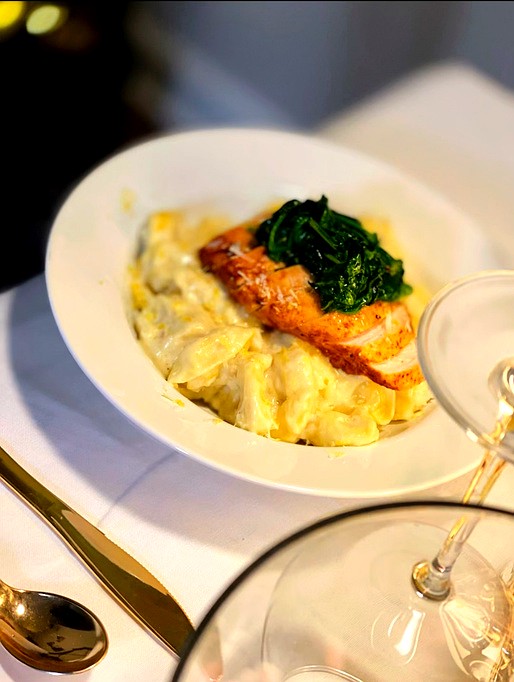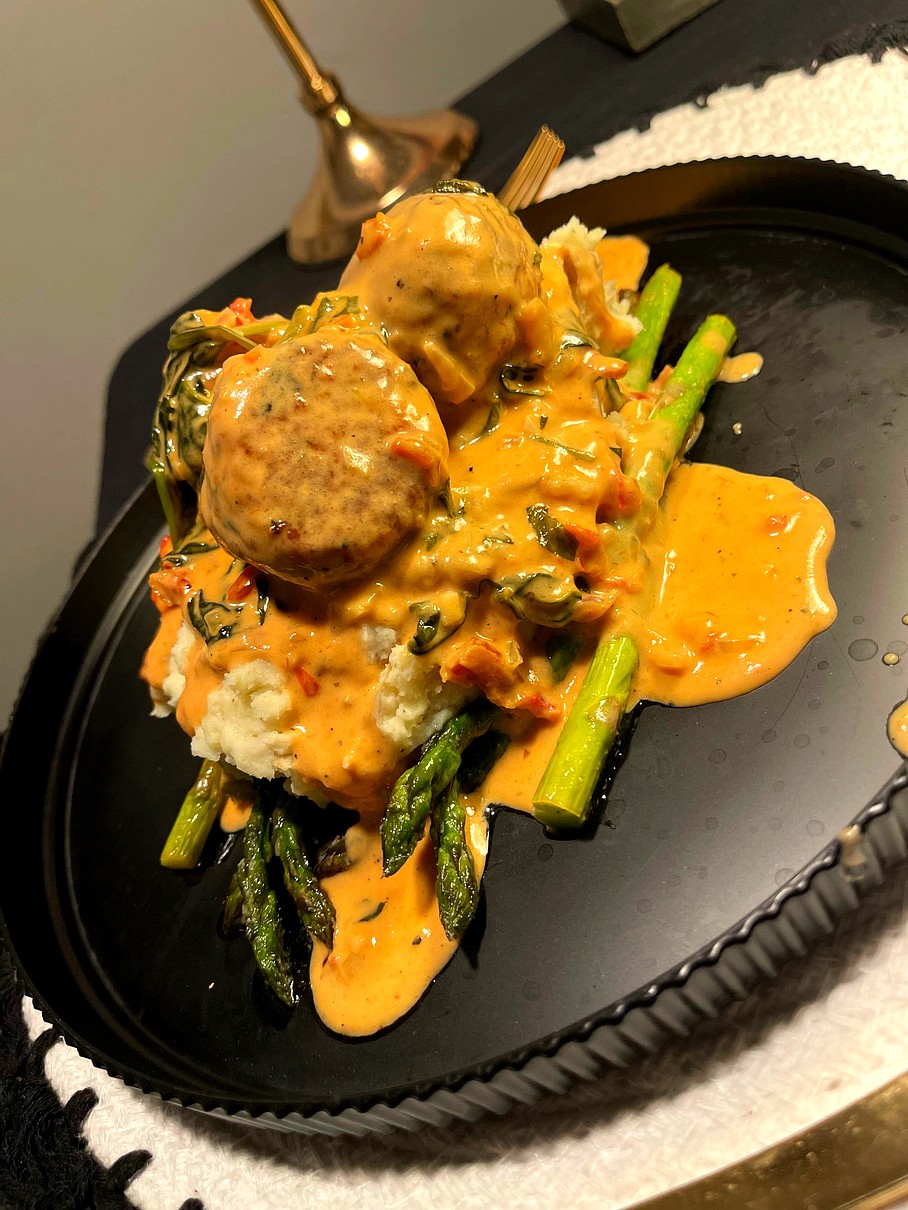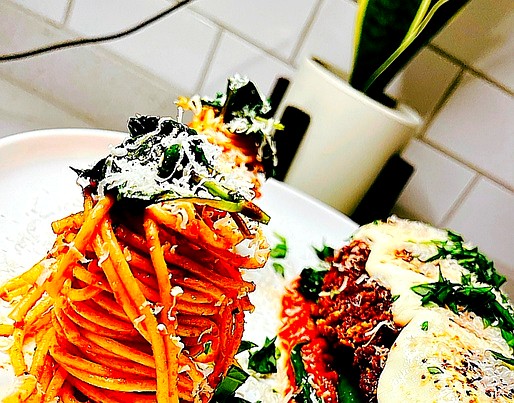
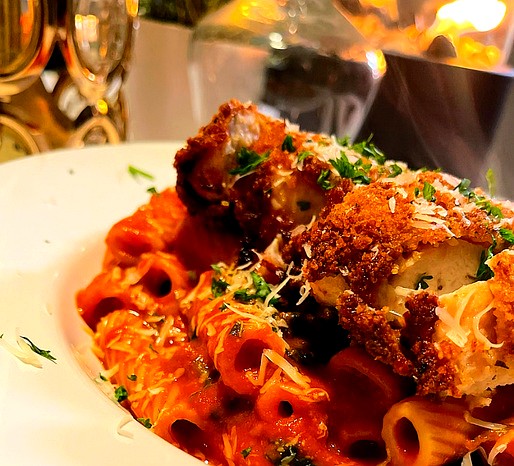
Chicken Rigatoni w/ Parmesan Tomato Cream Sauce
"This dish is comfort food elevated. It’s hearty but elegant, bold but balanced. I still remember the first time I plated this one—the golden crust on that chicken against the creamy red sauce hit just right. This is one of those meals that reminds you food can be both familiar and refined at the same time."
Estimated grocery cost: $17–$23 before tax
Estimated grocery costs vary by location, store, brand, and current prices. Estimates are before tax.
Ingredients
- For the Chicken
- For the Rigatoni and Sauce
Directions
- Bring a large pot of salted water to a boil for the rigatoni. Slice 2 chicken breasts in half horizontally (or pound them to an even ½-inch thickness) so they cook through before the crust gets too dark. Season the chicken with salt, pepper, garlic powder, and Italian seasoning. Dredge in 1 cup of flour, dip in 2 beaten eggs, and coat in 1 cup of breadcrumbs mixed with 1/2 cup of Parmesan cheese.
- Heat olive oil in a skillet over medium heat and fry the chicken until golden and it reaches 165°F in the thickest part, about 4–5 minutes per side. Set on a wire rack to rest while you make the sauce.
- Cook 12 ounces of rigatoni in the boiling salted water according to package directions, then drain and set aside.
- In a large skillet, heat 2 tablespoons of olive oil and sauté 3 minced garlic cloves for 1 minute until fragrant. Add 1 can of crushed tomatoes, 1 teaspoon of Italian seasoning, and a pinch of red pepper flakes if using. Simmer for 5 minutes.
- Stir in 1 cup of heavy cream and 1/2 cup of grated Parmesan. Let the sauce cook another 3–4 minutes until smooth and rich. Season with salt and black pepper to taste.
- Toss the rigatoni into the sauce until fully coated. Slice the chicken and arrange it on top of the pasta. Finish with a sprinkle of Parmesan and fresh parsley.
Chef Moe’s Tip
"Golden doesn’t mean done. Put a thermometer in the thickest part and don’t pull that chicken until it hits 165°F, then let it rest on a rack so the crust stays crisp. And when you make that sauce, don’t rush the simmer; let it thicken naturally. That slow emulsification of tomato and cream is what gives you that silky, restaurant-quality texture that hugs every bite of pasta."